Desert Driving Safety Tips in Dubai: How To Avoid Getting Stuck in Sand
Venturing into the off-road landscape of the UAE requires specialized skills. Master our expert desert driving tips Dubai to keep momentum, read shifting dunes, and avoid off-road sand traps.
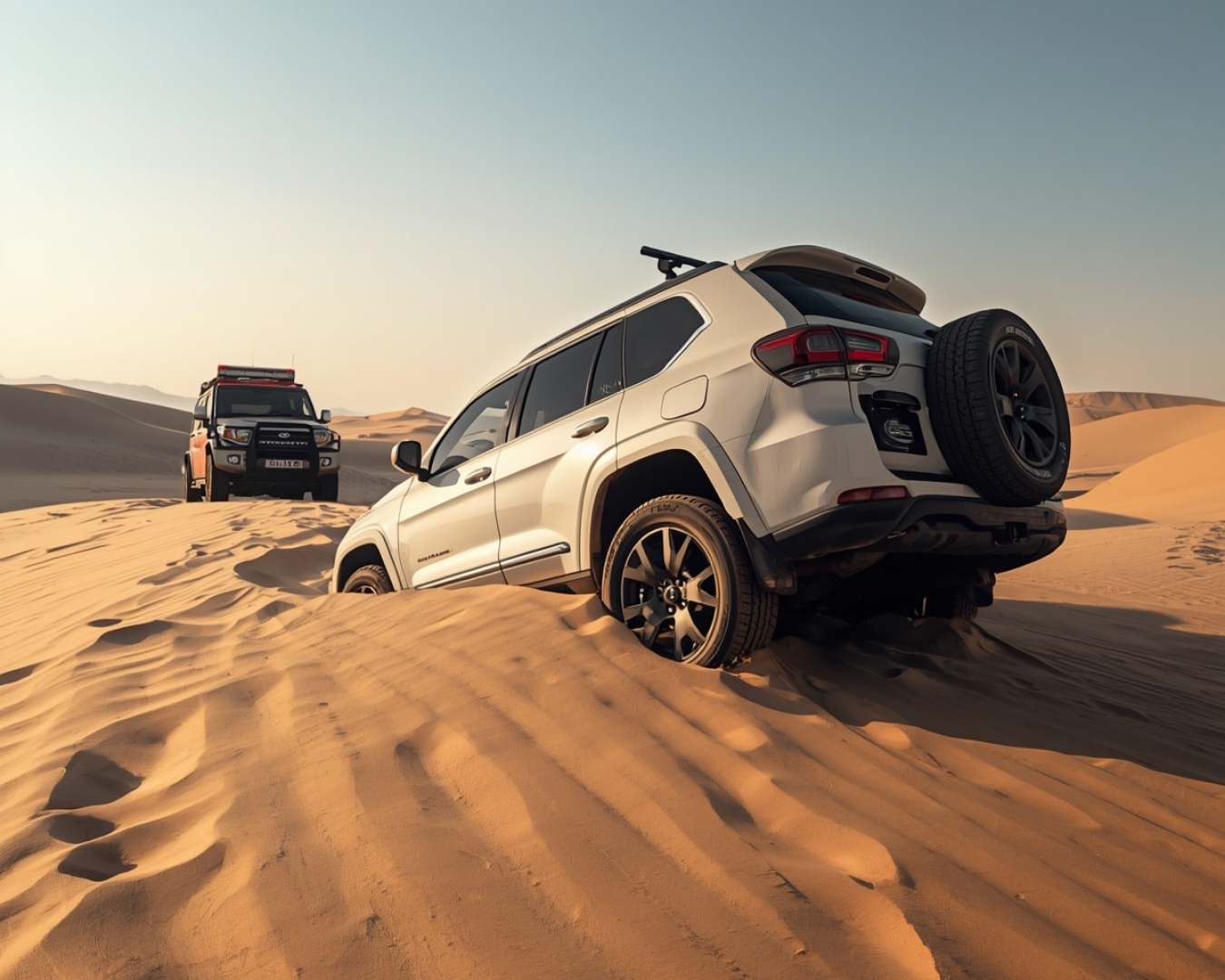
Driving out into the golden sands of the Arabian desert is a signature experience for residents and tourists in the United Arab Emirates. Whether your goal is a peaceful evening barbecue at Al Qudra Lakes, exploring the fossil formations in Mleiha, or navigating the technical slip faces of Lahbab, the dunes call to the adventurous spirit. Yet, the very fluid characteristics that make the sand stunning also make it incredibly treacherous for unprepared drivers.
Every year, hundreds of off-road excursions cut short because drivers underestimate the unique physical properties of desert dunes. Sinking into a sand trap is not merely frustrating; in the deep expanses of remote areas, it can rapidly escalate into a severe safety hazard. By learning the fundamental tenets of sand mechanics, vehicle configuration, and momentum management, you can drastically minimize your chances of needing an emergency desert recovery.
This comprehensive guide details the essential defensive driving tactics and pre-travel checklists required to navigate the sand safely and confidently.
1. Check and Correct Your Tyre Pressure First
If you remember only one piece of advice from this guide, let it be this: deflating your tyres is mandatory. Standard road tyres are filled to roughly 32 to 35 PSI (Pounds per Square Inch). At this high pressure, the tyre remains rigid and circular, maximizing fuel economy on tarmac by minimizing its contact area with the ground. However, on sand, this narrow circular profile acts like a sharp blade that cuts directly through the loose crust, burying your car immediately.
By using an off-road gauge to reduce your tyre pressure down between 12 to 15 PSI, the rubber deflates horizontally. This stretches your tyre track contact patch backward and outward, forming a wide flotation pad. This expanded surface area distributes your car's heavy frame weight evenly across the soft sand structure, letting you cruise over the dune peaks smoothly rather than carving into them.
Always deflate your tyres before your wheels touch the soft sand entry tracks. Waiting until you feel the vehicle bog down means you are already fighting a losing battle against axle sinkage.
2. Carry Essential Off-Road Recovery Equipment
Never rely solely on your vehicle's mechanical power or electronic driving modes to save you from a tricky sand bowl. Experienced desert crossers always pack a dedicated recovery kit inside their trunk before setting off. If your wheels do get caught in a soft pocket, having the correct gear can make the difference between a simple 10-minute self-extraction and a costly call for off-road recovery Dubai support.
Your minimum desert kit must include the following high-grade tools:
Heavy-Duty Tire Deflator & Pressure Gauge
Avoid guessing by using precise brass deflator valves to drop pressures accurately.
Oversized Sand Shovel
A long-handled spade allows you to quickly clear packed sand from under your frame rail and tires without extreme physical strain.
Heavy-Duty Traction Boards
Ridged nylon recovery tracks give your tires instant mechanical grip when sunk into fluid pockets.
Rated Kinetic Snatch Rope & Soft Shackles
Inelastic tow straps can snap dangerously. Kinetic ropes stretch under tension, storing energy to safely pop a trapped vehicle out of a hole.
High-Capacity 12V Air Compressor
Once you complete your trail ride, you must reinflate your tires immediately before driving fast on the highway to avoid a dangerous blowout.

3. Learn to Read and Understand Shifting Sand Types
To the untrained eye, all desert sand looks completely identical. To a seasoned off-road driver, the desert is a constantly changing tapestry of shifting textures, moisture profiles, and structural densities. Learning to visually read the sand before you drive over it allows you to adapt your throttle inputs dynamically.
Red Sand vs White Sand
Dubai's desert features distinctly varied color regions. The deep red sand found in areas like Lahbab contains higher iron-oxide layers and tends to form taller, steeper dunes with sharp slip faces that demand continuous momentum. Lighter, white coastal sand profiles often hide softer pockets and fluid silt bars that trap heavy luxury vehicles easily.
Sun Position and Moisture Variations
The time of day directly dictates how stable the sand structure is. In the early morning, overnight atmospheric condensation traps moisture within the top layers of the dune, cementing the grains together and providing maximum traction stability. By 2:00 PM, the scorching sun evaporates this moisture, rendering the sand extremely fluid and loose.
Furthermore, mid-day light eliminates shadows, hiding dangerous drop-offs and steep sand bowls. Always prefer driving during the early morning or golden hour before dusk for maximum visibility and structural traction advantages.
4. Never Drive Alone: Group Dynamics Keep You Safe
The golden rule of desert driving is simple: never venture deep into the dunes as a single vehicle. No matter how capable your truck is, or how advanced your electronic diff-locks are, mechanical failures, hidden drop-offs, and unexpected sinkage can occur in seconds.
Always travel in a convoy consisting of at least two or more off-road vehicles. When traveling in a line, ensure the tracking car keeps a safe distance of at least three car lengths behind the lead driver to avoid rear-end collisions if the front vehicle encounters a sudden sand trap or steep ridge. If the lead vehicle becomes high-centered, the second vehicle remains safely on stable ground, positioned perfectly to perform a controlled kinetic pull or secure a winch anchor line.
5. Master the Best Recovery Practices When Stuck
If your forward momentum drops to zero and you feel the car sink into a sand trap, remember that your initial mechanical choices dictate the outcome. Avoid panning or spinning the tires wildly, which instantly high-centers your chassis frame flat against the sand bank.
Instead, follow these professional extraction practices:
Clear the Axles First
Dig away any packed sand accumulating under the bumpers, diff-cases, or frame rails before attempting a pull. If the car's body is dragging on sand, no amount of pulling power will free it easily.
Use Straight-Line Pull Alignments
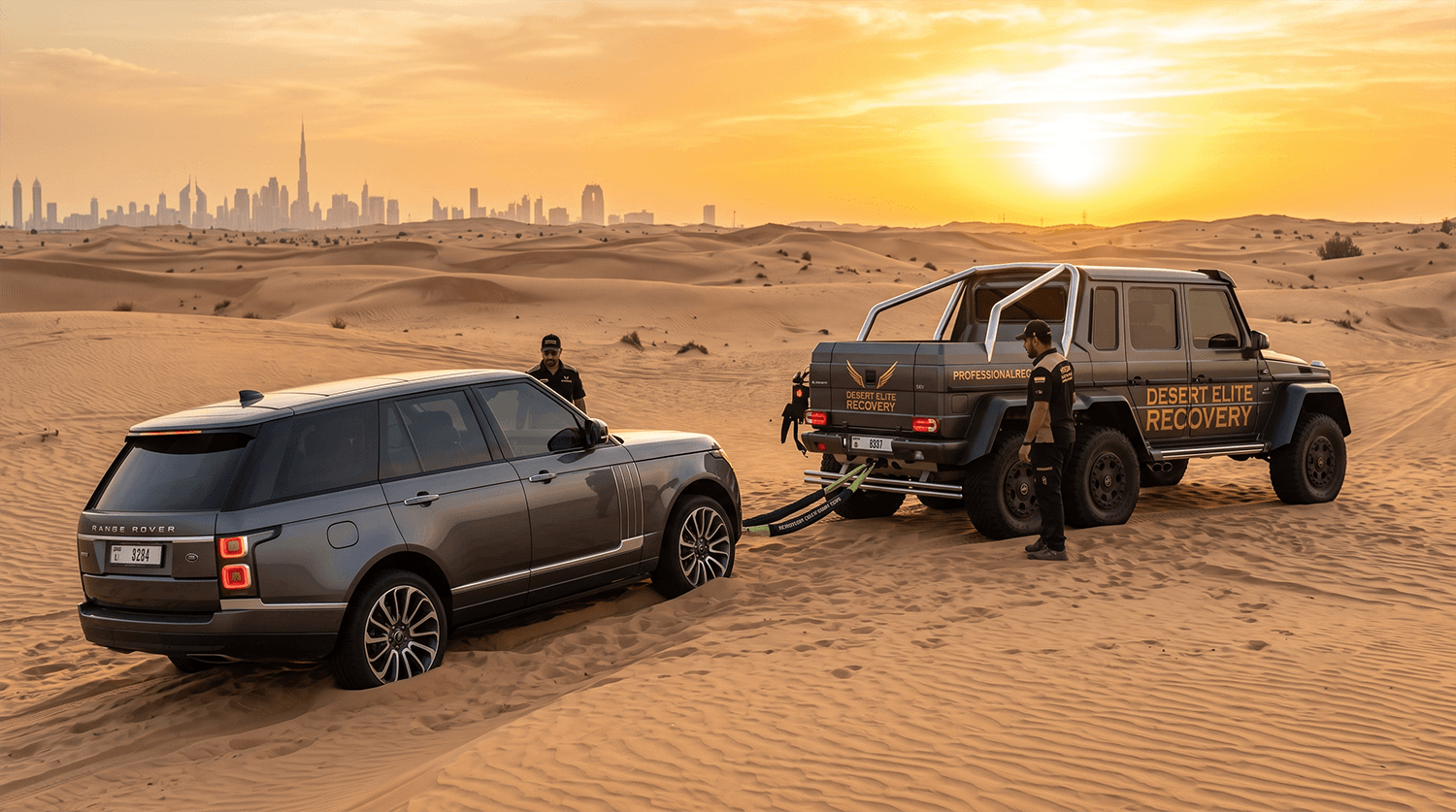
When a second car attaches a kinetic snatch rope, always align the rescue vehicle in a straight, direct trajectory. Pulling at sharp angles places immense lateral stress on steering links and can cause tow bars to break violently.
Deactivate Electronic Stability Control (ESP)
Modern traction computers automatically apply brakes or cut throttle inputs when they detect spinning wheels. On loose sand, minor wheel slip is required to build momentum. Leaving ESP engaged will choke engine power and trap you instantly.
If your group's self-recovery attempts fail, or you do not have proper recovery anchors, call a licensed desert recovery Dubai service. Professional dispatch teams utilize lifted, high-clearance support rigs equipped with extreme hydraulic winches to gently slide your vehicle back to safety without damaging body panels or expensive suspension linkages.
Frequently Asked Questions
Trapped in the Sand? Let Us Handle the Heavy Lifting
Did you lose momentum on a steep dune? Is your vehicle high-centered or overheating? Avoid dangerous physical exhaustion under the hot sun. Contact the off-road dispatch office at Desert Rescue UAE right now. We will map your GPS coordinates and send a specialized 4x4 recovery truck directly to you.